Whole-House Repiping
Rusty water, weak pressure, and pipes that have been in the ground since the Eisenhower administration are not problems a patch job can fix. At Mr. Rooter Plumbing, we've seen what happens when homeowners put off whole-house repiping too long, and it's never cheaper the second time around. This post walks you through how to spot the warning signs, what the process looks like from day one to done, and what it means for your water pressure and quality on the other side.
How to Tell Your Home Needs New Pipes
The signs show up before the pipes give out. Brown or orange water at the tap means corrosion has worked its way through the pipe walls and into your supply line. Low pressure that drops further when two fixtures run at once points to a buildup or narrowing inside the pipes. Visible corrosion, green staining around copper fittings, or pinhole leaks that keep coming back in different spots aren't isolated problems.
Galvanized steel pipes have a functional lifespan of 40 to 70 years. Polybutylene, which was installed widely through the 1980s, degrades from chlorine exposure and fails without warning. If your home was built before 1990 and still has original plumbing, the pipes are past their design life. Water line repiping is maintenance that's overdue.
A dependable plumber can run a camera inspection to confirm what's happening inside the lines before work begins. The footage shows buildup, corrosion, and weak sections you can't see from the outside. It also documents the current condition, so you have something concrete to work from.
What Happens During a Water Line Repiping Job From Start to Finish
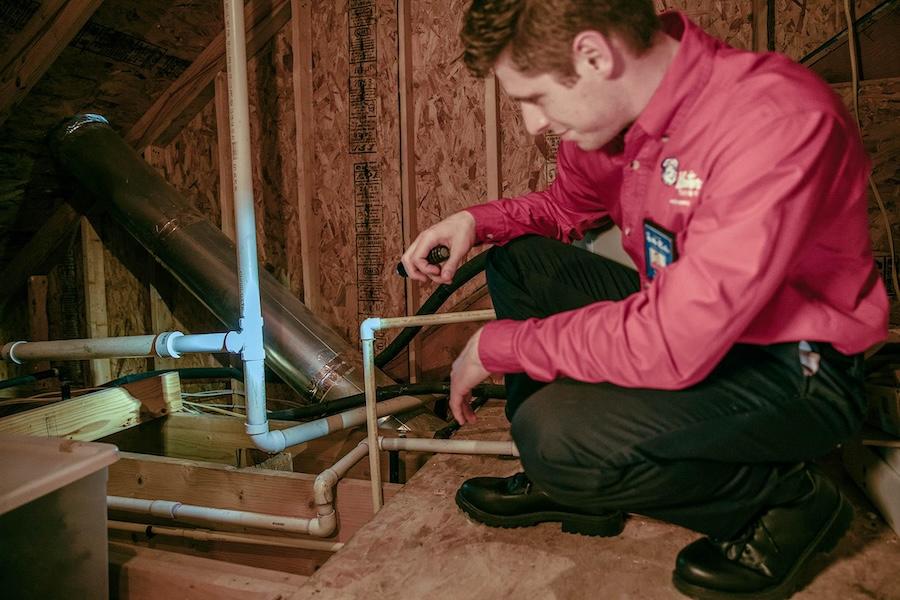
Whole-house repiping in Pittsburgh starts with a full assessment of your existing system. The plumber maps the pipe layout, identifies access points, and determines which areas require opening walls or ceilings. Most residential jobs use PEX or copper for the new lines. PEX is flexible, freeze-resistant, and runs through tight spaces without as many fittings. Copper is durable and has a long track record in residential plumbing.
The crew works section by section through the house. They shut off water to one zone, remove the old pipe, run a new line, and restore access before moving to the next area. Drywall cuts are kept small when possible. Patching happens after the plumbing passes inspection. The sequence stays consistent across most jobs, though larger homes or complicated layouts add some extra time.
There are two trenchless alternatives that can be used in specific situations. Pipe lining involves coating the inside of an existing pipe with an epoxy lining that hardens in place, which works when the pipe structure is intact but corroded internally. Pipe bursting pulls a new pipe through the old one while breaking the old pipe outward. Both methods reduce excavation, but sometimes issues call for direct replacement because the scope is too broad for pipe lining or pipe bursting alone.
How Long a Full Repipe Actually Takes
Most whole-house repiping jobs take two to five days for an average single-family home. Larger homes, homes with multiple bathrooms, or older properties with complicated pipe routing take longer. A three-bedroom, two-bath house with accessible walls can be done in two to three days. Add a day or more if the crew encounters unexpected routing problems or heavily corroded fittings that need extra work to remove.
Water service is usually interrupted in sections during the job, not all at once. Each zone goes down temporarily while the crew works through it, then comes back online before they move forward. You won't lose water to the whole house for days at a stretch. Plan for some scheduling around the work, but it's not a situation where you need to vacate the property.
A repiping specialist in Pittsburgh will give you a timeline estimate after the initial walkthrough. That estimate should account for your home's size, the pipe material being removed, and the access situation. If a quote comes back without those specifics built in, ask for them before work starts.
What Having New Pipes Does to Your Water Pressure and Quality
New pipes deliver water the way the system was designed to deliver it. Galvanized pipes accumulate rust and mineral deposits over the decades, and the buildup narrows the interior diameter. A pipe that started at three-quarters of an inch can end up more restricted after years of corrosion. Replacing it will restore the full flow capacity.
Water quality improves a lot afterward. The rust that discolors water comes from corroded pipe walls, not the water source. Once the old pipes are out, the brown or metallic taste clears up. Homeowners with galvanized or polybutylene systems normally notice the difference quickly after the new lines go live.
Pressure improvement depends on where the restriction was. If the problem was interior buildup across multiple lines, repiping produces a difference at every fixture. If pressure issues trace back to the municipal supply line or a pressure regulator, those need separate attention. A good plumber will distinguish between the two before the job starts, so the outcome matches the expectation.
Whether Homeowners Insurance Covers Repiping Costs
Standard homeowners insurance covers sudden and accidental water damage, not gradual deterioration. If a pipe bursts and floods a room, the damage to walls, floors, and belongings is usually covered. The pipe replacement may not be. Pipe upgrades that are driven by age or corrosion fall under maintenance, which policies exclude.
Some policies cover plumbing work when a covered event causes the pipe failure. Document the damage thoroughly, file the claim quickly, and get the adjuster's determination in writing before committing to the repair. Waiting too long after a loss event can void the claim. If your insurer questions the cause, an independent plumber's assessment provides third-party documentation of the condition of the pipes.
A few insurers offer endorsements or riders that expand coverage for pipe failures. Review your policy before assuming that it won't be covered. If your home has polybutylene pipes, some insurers have specific provisions tied to that material because of its failure history. It's worth checking before you write off the possibility.
Do You Need New Pipes?
If your home is showing the warning signs or you're working through older pipes and want an answer on where things stand, contact Mr. Rooter Plumbing. We offer whole-house repiping in Pittsburgh, Pennsylvania, and the surrounding area. A repiping specialist in Pittsburgh will walk through your system, give you an honest inspection, and lay out exactly what whole-house repiping would look like for your property.